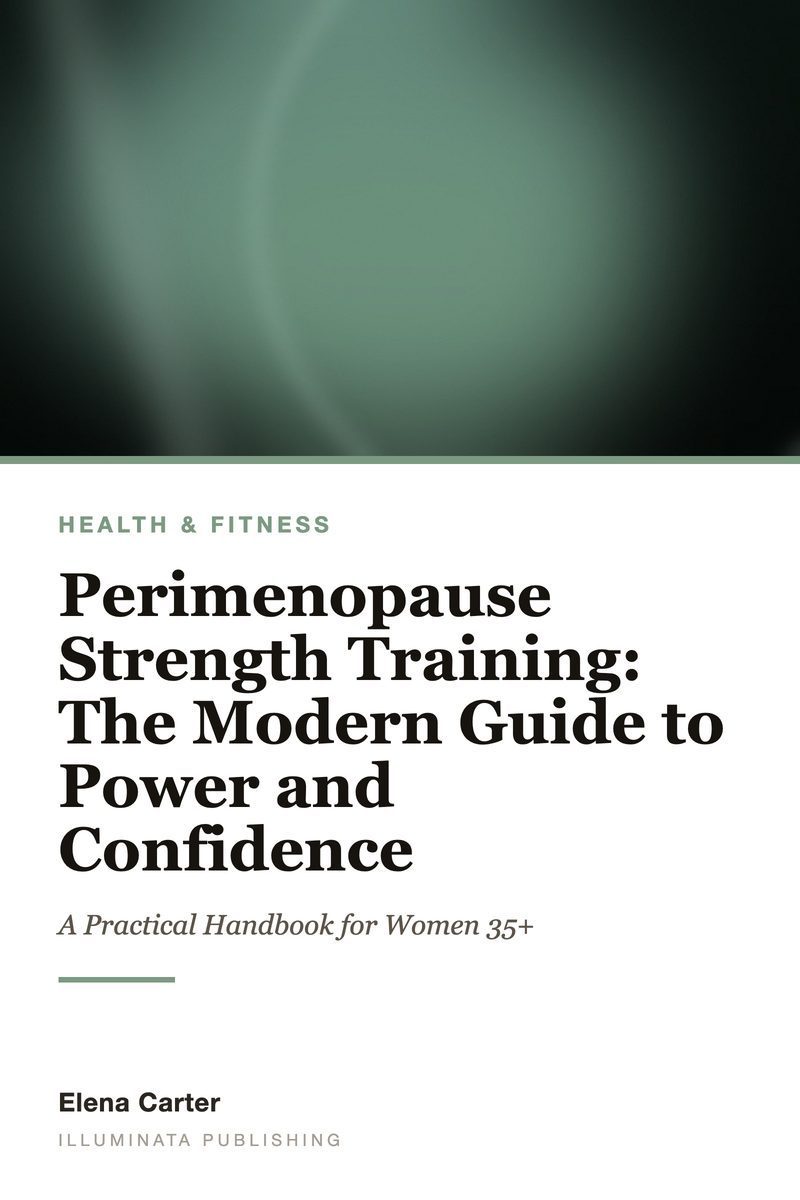
Perimenopause Strength Training: The Modern Guide to Power and Confidence
- Estrogen fluctuations cause variable joint pain and recovery times—adjust expectations accordingly
- Progesterone decline impacts sleep and tissue repair, making rest quality essential
- Testosterone decreases gradually, but strength training actively counteracts this loss
Read Chapter 1 free
Your Body in Transition: What Actually Happens — read it here, no signup
Understanding what's happening in your body during perimenopause isn't just interesting—it's essential for training smart. Your hormones aren't just fluctuating randomly; they follow patterns you can learn to work with.
Estrogen doesn't just decline during perimenopause—it spikes and crashes unpredictably. One week you feel energetic; the next, you're dealing with inflammation and water retention. These swings can last anywhere from a few days to several weeks.
What this means for your training:
Track your symptoms alongside your training. Most women find their strength peaks during the low-estrogen phases and struggles during the high-estrogen phases. This isn't in your head—it's physiology.
Progesterone typically begins declining years before estrogen. This hormone regulates sleep, anxiety, and tissue repair. When it drops, you might notice:
Without adequate progesterone, your body doesn't recover as efficiently from training. This is why sleep quality becomes non-negotiable during perimenopause.
Testosterone decreases gradually—about 1% per year after your mid-20s. While women have far less testosterone than men, it drives muscle protein synthesis, bone density, and metabolic rate.
The decline isn't dramatic, but its effects accumulate. You'll notice:
The good news: strength training itself stimulates testosterone production. You're not fighting a losing battle—you're actively countering the decline.
Perimenopause often brings elevated baseline cortisol. Combined with life stress, this creates a persistent catabolic state that breaks down muscle tissue.
Practical protocol for managing cortisol:
| Hormone | Primary Effect | Training Implication | |---------|----------------|---------------------| | Estrogen | Inflammation, joint laxity | Modify intensity during spikes | | Progesterone | Recovery, sleep quality | Emphasize rest and sleep | | Testosterone | Muscle protein synthesis | Progressive overload remains critical | | Cortisol | Muscle breakdown | Manage training volume strictly |
Use this checklist weekly to identify patterns:
After 8-12 weeks, patterns emerge. You'll know when to push intensity and when to prioritize recovery.
Your muscle tissue doesn't care about your age—it responds to stimulus. But the hormonal environment surrounding that muscle tissue has shifted dramatically, and that changes everything about how you should train.
During perimenopause, estrogen levels fluctuate wildly before declining. What many don't realize is that estrogen acts as a metabolic protector for muscle protein. When estrogen drops, your muscles become more resistant to synthesis and more prone to breakdown. This isn't fear-mongering—it's physiology. Research on muscle protein synthesis shows that the anabolic threshold rises, meaning you need more stimulus to trigger the same muscle-building response you got easily in your twenties.
Progesterone, which also plummets during this transition, influences how your muscles recover and how inflammation settles. Lower progesterone often means longer recovery times and more pronounced soreness after training.
Your muscles now operate under different rules:
This doesn't mean you should train less. It means you should train smarter. The traditional approach of grinding through long sessions with moderate weights actually works against you now. Your body needs more deliberate stimulus to provoke adaptation.
Prioritize heavy compound movements that recruit maximum muscle mass. Reduce total training volume while increasing intensity. Extend your warm-up periods to protect joints and connective tissue. And critically, stop comparing your recovery capacity to what it was three years ago.
| Factor | Under 35 Approach | Perimenopause Approach | |--------|-------------------|------------------------| | Protein intake | 0.8g/kg body weight | 1.2-1.6g/kg body weight | | Recovery days | 1 day between sessions | 2-3 days for same muscle groups | | Workout duration | 45-60 minutes | 30-45 minutes, higher intensity | | Load progression | Linear weekly | Linear bi-weekly or slower | | Warm-up | 5 minutes | 10-15 minutes with mobility focus |
1. Calculate your protein target — multiply your body weight in kilograms by 1.4. That's your minimum daily intake in grams 2. Audit your current training — if sessions exceed 50 minutes, you're likely trading quality for quantity 3. Add one recovery day — observe how your performance and soreness respond over two weeks 4. Test your threshold — if you've been using the same weights for months, you've likely adapted. Increase load by 5% and reduce reps if needed
Your muscles are still capable of remarkable adaptation. They simply require a more intelligent approach to get there.
About this book
Perimenopause Strength Training: The Modern Guide to Power and Confidence A Practical Handbook for Women 35+ Category: Self Improvement | Author: Elena Carter Are you ready to transform your knowledge and take action? This comprehensive guide delivers practical, step-by-step strategies you can imple